
OneSky unveils Wellness Room for caregivers at Sham Shui Po Community Living Room

Childcaring is an all-consuming, exhausting job that leaves little time for caregivers. Taking care of one’s physical and mental health should be a top priority for caregivers. OneSky’s Community Living Room in Sham Shui Po understands this need and opens a Wellness Room dedicated to empowering caregivers to focus on health and self-care.

While many fitness facilities exist, it is not simple for caregivers of children aged 0-6 to put their little ones down to work out. Physical activity is particularly important for caregivers since they regularly have to tote and go along with children for extended periods, run errands, and handle household tasks. Caregivers often feel worn out, and keeping up health and body strength is critical for tackling the demands of parenting.
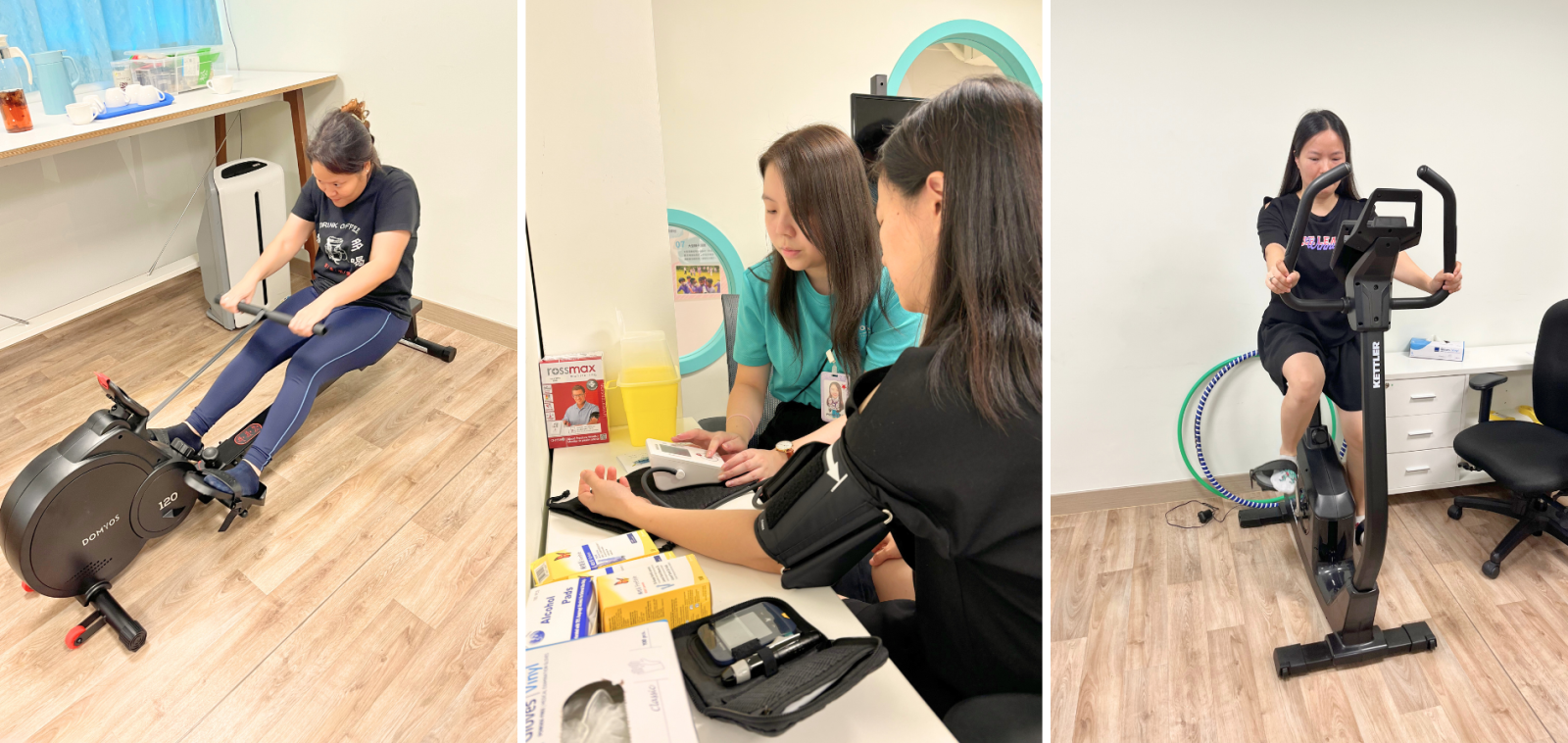
Onesky wellness room and members exercising

The OneSky Wellness Room houses exercise equipment such as an exercise bike and a rowing machine, allowing caregivers to squeeze in a quick sweat session. The spacious design also allows easy options like yoga and stretching. Digital scales and blood pressure monitors are also ready to allow users to utilize them.

Regular exercise not only lifts up mood by boosting endorphins but also enhances overall mental and physical health. This is especially beneficial for those juggling the heavy duties of childcare. The Wellness Room creates a sense of community by allowing caregivers to organize their own fitness sessions among the social circle. This precious “me time” helps build social support networks while keeping everyone strong and healthy.

By taking advantage of the Centre’s respite services, caregivers can confidently entrust their children to capable hands, allowing them to focus on their own self-care without any worries.

Instructions:

Time: Monday to Friday, 11:00 AM – 5:00 PM | Saturday, 2:30 PM – 3:00 PM
Registration: Please register at the front desk on the first floor before use.
Service: Caregivers can book childcare services before using the Wellness Room (except on Saturdays).

Hong Kong’s community living rooms should cater to children’s needs

Susanna Lee, Executive Director, P.C. Lee OneSky Global Centre for Early Childhood Development, wrote to SCMP on the topic of community living rooms transforming the lives of subdivided flat children.

The concept of community living rooms, strongly encouraged by the government, is a promising remedy for the challenges of inadequate housing. It is important to consider the growth and development needs of underprivileged children when designing these social spaces.

When we talk about community living rooms, we often focus on the extended living spaces which provide essential amenities such as the space to cook or shower, and recreational activities that help individuals develop a sense of community. Yet the needs of young children, the elderly and the low-income working class can vary a lot.

For example, children aged six and below are experiencing rapid growth in mind and body. A community living room designed to meet their needs would mitigate the developmental limitations imposed by inadequate housing.

Physically, limited space makes it harder for young children to crawl and learn to balance, increasing the risk of falling as they grow. Mentally, poor soundproofing in subdivided flats forces parents to encourage children to speak softly, suppressing their natural expressions of emotion such as crying or laughing. Besides, many of these flats are located above eateries, where noise and poor air quality disrupt sleep.

Socially, while communities like Sham Shui Po are vibrant, it is rare to find an environment that stimulates children’s learning and development while also empowering caregivers with parenting knowledge and a supportive network.

In Sham Shui Po, where there are over 22,000 subdivided flats and the proportion of children aged three to five is above the Hong Kong average, the demand for child-focused community living rooms is high. These spaces should offer toys, facilities and child-friendly classes that can promote children’s physical and mental development.

To free caregivers from the daily grind of parenting, services such as cafeterias and napping rooms could be offered. Most importantly, these spaces should enable caregivers to raise their children in a safe and comfortable environment.

We need more targeted community living rooms that cater to the diverse yet specific needs of users, including children, where they can spend the whole day, such that the community living room becomes a true extension of their cramped living space.